
Anguilla has now found itself touched by two revolutions in less than sixty years.
The first was political.
The second is technological.
Both changed the island’s relationship with the world.
In 1967, Anguilla rebelled against a forced political union with St. Kitts and Nevis. Men took up defensive positions along the island’s roads and coastline. Guns were carried on both sides. Shots were fired.
And yet, not a single person died.
It remains one of the strangest revolutions of the modern era: a tiny Caribbean island confronting the British Empire not through conquest or ideology, but through unity, faith, and the stubborn conviction that dignity mattered more than imperial convenience.
The people of Anguilla were poor. The island had little infrastructure, little water, little industry, and almost no geopolitical leverage. Colonial administrators often treated it as an afterthought — too small to matter, too remote to command attention, too insignificant to shape its own future.
But Anguillians understood something larger.
They understood that even small places possess the right to determine their own destiny.
For a brief moment, the world noticed.
Then it forgot.
History moved on. Anguilla slipped quietly back into the margins of international consciousness, known mostly to sailors, travelers, and those fortunate enough to discover the island for themselves.
And then, decades later, another revolution arrived.
Artificial intelligence.
Today, some of the most valuable technology companies in the world compete for domain names ending in two simple letters:
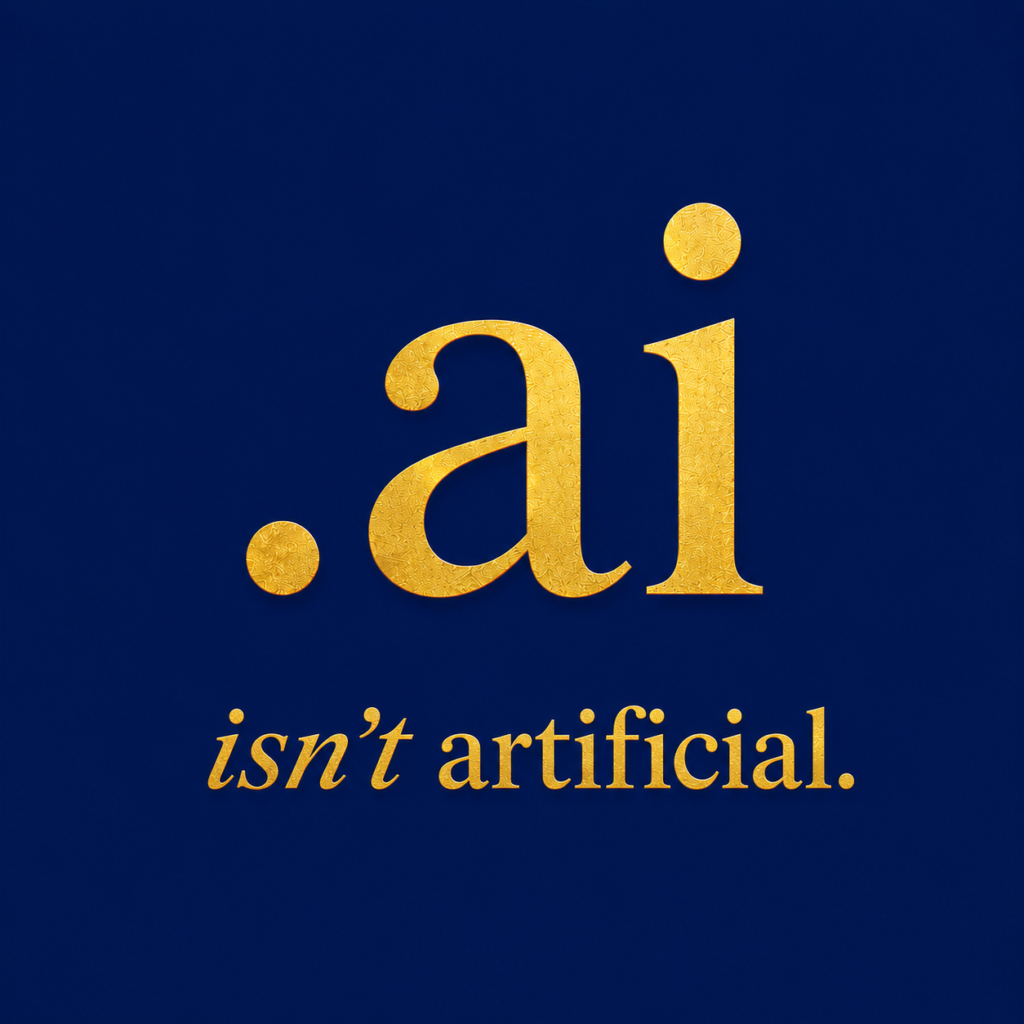
.ai
What much of the world still does not realize is that .ai is not merely shorthand for artificial intelligence. It is the country-code domain for Anguilla.
In the middle of the modern AI gold rush, one of the smallest islands on earth unexpectedly found itself holding a digital asset of extraordinary value.
Every startup chasing the future. Every investor hunting the next breakthrough. Every company staking a claim in artificial intelligence repeats the island’s name again and again, often without realizing it.
.ai.
There is something deeply ironic about that.
For generations, Anguilla was treated like a pawn on someone else’s chessboard — a place acted upon rather than listened to. Its people knew what it meant to be underestimated. They understood neglect intimately.
Yet the same island now sits quietly at the center of one of the most transformative technological revolutions of the century.
The first revolution was fought with fishing boats, old rifles, transistor radios, and an unshakeable belief in self-determination.
The second arrived through algorithms, venture capital, cloud infrastructure, and two accidental letters assigned in the early days of the internet.
One was about political survival.
The other may reshape the island economically in ways few could have imagined.
But beneath both revolutions lies the same enduring truth:
Anguilla has spent generations defying the assumptions others made about it.
Perhaps that is why this moment feels larger than mere technological coincidence.
Because long before the world associated Anguilla with artificial intelligence, the island had already demonstrated something profoundly human — resilience, unity, dignity, and the determination of ordinary people to shape their own future.
For decades, Anguilla was treated as a footnote.
Now the world repeats its name thousands of times each day without even realizing it.
.ai.
History has a strange way of returning overlooked places to the center of the story.