
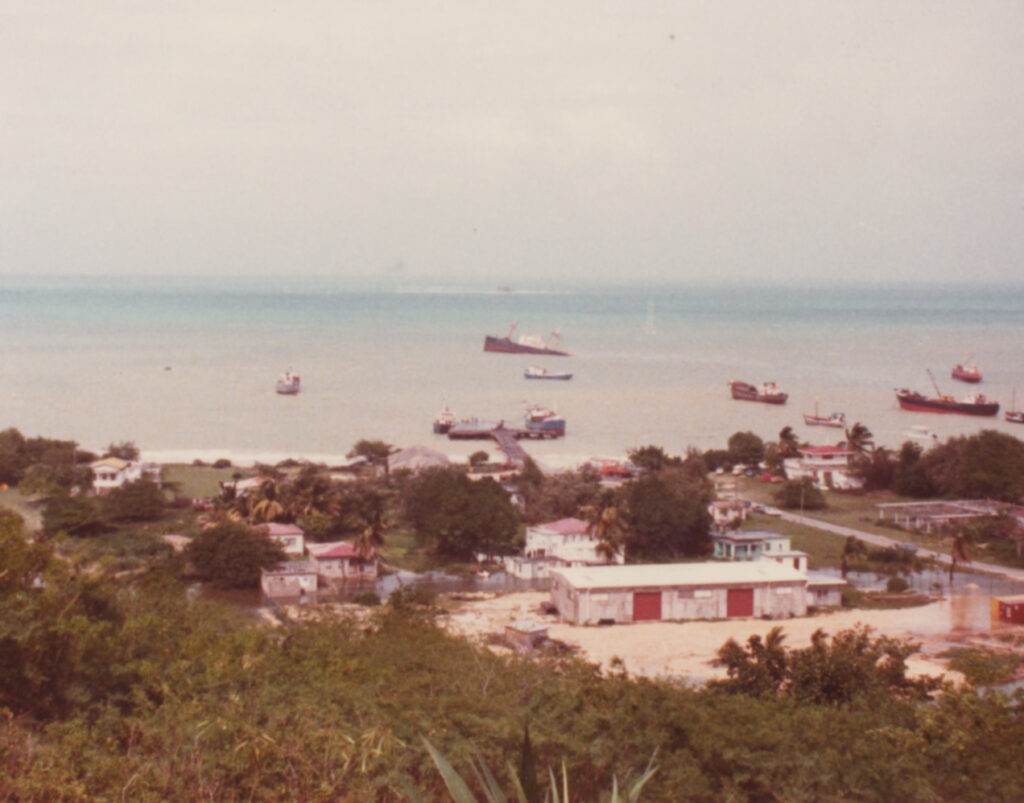
In 1984, I was sent to Anguilla with an envelope of cash and a renovation plan.
I was twenty-seven years old. I had no scheduling software, no supply chain, and no real understanding of what I was walking into. What I had was forty-five days to renovate and reopen eleven buildings that had been closed for seven years on an island thirty-five square miles in size with limited fresh water, no deep harbor, and almost no infrastructure to support what I was trying to do.
I figured it out.
Not because I was particularly brilliant. Because I had no choice, and because the island taught me things no classroom ever could.
How trust is built slowly and lost instantly.
How relationship determines whether the work gets done.
How the absence of a supply chain forces a different kind of thinking — not What do I order? but What do I have, and what can I make from it?
How to keep going when the systems you depend on stop working.
I carried those lessons forward for thirty years without fully understanding what they were preparing me for.
Then Hurricane Maria hit Puerto Rico.
September 2017. Category 4 at landfall. Infrastructure collapsed. Ports overwhelmed. Entire supply chains across the Caribbean simply ceased functioning.
At the time, I was leading construction consulting work at Marsh on one of the region’s most significant hospitality claims. Our specialty was delay — not just what the storm destroyed, but what the destruction of everything around it ultimately cost in time.
Old building codes requiring upgraded systems. Equipment stranded offshore because regional ports were overwhelmed. Materials delayed for weeks, then months. Contractors operating in conditions that bore little resemblance to normal construction environments.
Every one of those factors carried a cost.
Our job was to find the number, defend it, and help bring the claim to resolution.
And sitting inside all of it — the calculations, the documentation, the expert analysis — was something I recognized immediately from Anguilla in 1984.
The Caribbean does not care about your schedule.
It does not care about your supply chain, your delivery timeline, or your carefully constructed critical path. When an island decides to test you, it tends to test everything simultaneously: the physical, the logistical, and the human.
What saves you — what has always saved people on islands — is not the spreadsheet.
It is the understanding, earned through experience, of how things actually work once systems begin to fail.
How people behave under pressure.
How trust either holds or doesn’t.
How islands — surviving for centuries with finite resources and uncertain outside help — teach resilience from the inside out.
Puerto Rico is Borikén. The great land of the valiant and noble Lord. The Taíno name for an island that has endured conquest, colonization, hurricanes, and neglect — and endured anyway.
The Taíno understood something the modern risk industry is still struggling to quantify.
That damage is never merely physical.
That what a storm takes is not only what it destroys, but what the destruction of everything around it costs the people trying to rebuild.
That the human variables — trust, relationship, resilience, the capacity to continue when systems collapse — are often the factors that determine whether recovery happens at all.
I learned that in 1984 on a small island most people had never heard of.
I applied it decades later on one of the Caribbean’s most famous ones.
Some islands keep sending for the same people.
I do not fully understand why.
I’ve stopped asking.