
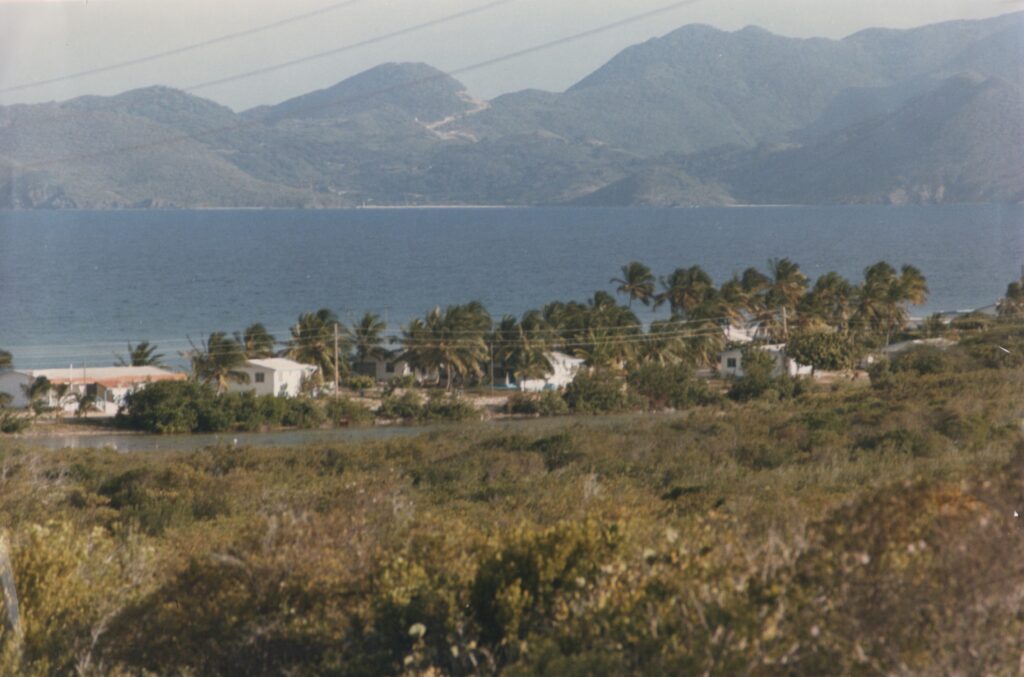
In the summer of 1967, the island of Anguilla had just done something impossible.
Six thousand people on thirty-five square miles of limestone had expelled the St. Kitts police force, held a referendum that went 1,813 to 5, and declared themselves a republic. They had no army, no navy, no international recognition, and almost no money.
What they had was the world’s attention.
And the world, it turned out, had some ideas.
The publicity surrounding Anguilla’s declaration of independence attracted a flow of outsiders. Donald Westlake, the American writer who documented the revolutionary period firsthand in his 1972 book Under an English Heaven, described what followed as a parade of characters that would strain the credulity of a novelist.
There was the kilt-wearing, cigar-smoking Jewish Chinaman from the United States who wanted land for what he described as a thousand-year-old European religious sect — which, on closer examination, translated into a free-love farm plus abortion clinic.
There was the young American hippie couple who arrived with nothing but a tent and a shotgun and immediately began cadging food from the locals.
There was the businessman prepared to solve all of Anguilla’s economic problems within two weeks — provided he was given a free hand and the title of Economics Minister.
Another offered $25,000 a month if the Anguillans would mortgage the entire island to him as security.
A Canadian wanted a couple of beaches in exchange for building a radio station.
An Englishman simply hoped to relocate his freeloading brother-in-law.
And then there was Dino Cellini.
Cellini was said to represent Meyer Lansky — the man widely described as the financial architect of the American Mafia and its Caribbean casino operations. According to Westlake, Cellini arrived either to discuss gambling casinos or simply to get a tan. It was not entirely clear which.
The visit mattered because Britain and Robert Bradshaw had already been insisting that Anguilla’s revolution was backed by American organized crime. The Mafia allegations became part of the justification for Britain’s 1969 invasion. William Whitlock, the British envoy sent to negotiate, reported back to London that Ronald Webster appeared to be under the control of a Mafia-type organization.
British troops arrived eight days later.
The accusations were investigated.
No evidence of Mafia involvement was ever found.
But Cellini’s visit did not help.
Neither did the letter.
Among the opportunists and adventurers, one proposal stood apart. An American wrote to the Anguillian Council claiming to represent Aristotle Onassis — at the time one of the richest and most powerful men in the world, owner of one of history’s great private shipping fleets.
The offer was extraordinary.
Onassis, the letter claimed, was prepared to pay Anguilla one million dollars annually in exchange for using the island as a flag of convenience for his shipping empire, similar to arrangements in Panama and Liberia.
The Anguillians wrote back requesting additional details.
The man never responded.
Later, the Onassis office denied any connection to the proposal. Whether Aristotle Onassis himself ever knew about it remains unclear.
Ronald Webster’s response to all of this was characteristically direct.
Anguilla was not interested in becoming a flag of convenience. It was not interested in casinos. It was not interested in becoming a nation of what Webster called “busboys and bellhops” — a second-class workforce in its own country, as he believed had happened elsewhere in the Caribbean tourism economy.
“We have turned down $1,000,000 cash for gambling concessions,” Webster wrote in the Anguilla White Paper — a full-page advertisement placed in The New York Times in August 1967, addressed directly to the American people and asking for support and donations.
The ad raised substantial money.
All of it went into the treasury.
Meanwhile, Anguilla subscribed to Dun & Bradstreet and began sorting through what Westlake memorably described as “the bag of mixed nuts” that had arrived on its shores.
The kilt-wearing Chinaman was gently escorted to the airport.
The hippies — minus their shotgun but still carrying their tent — were bundled into a boat and sent off to bother the French in St. Barthélemy.
Dino Cellini got his tan, but nothing else.
The would-be Economics Minister was thanked for his interest and asked for details. He disappeared instead.
And the doctor with the machine that cured all diseases encountered a familiar obstacle. As Council member Jerry Gumbs reportedly put it:
“Will I get my people to understand it? Or will they object to it like the American Medical Association?”
They objected to it exactly like the American Medical Association.
What this parade of opportunists understood — even if they misunderstood Anguilla itself — was that something remarkable had happened on that small island.
A new nation, however unrecognized, however poor, however precarious, had suddenly appeared in the world.
What they failed to understand was who they were dealing with.
Ronald Webster had spent twenty-seven years working on a Dutch estate in St. Maarten before returning home to lead his people. He built the revolution on the conviction that dignity mattered more than money. He refused to sign away Anguilla’s future in Barbados. And when diplomacy finally exhausted itself, he fired warning shots over the head of the British envoy.
He was not going to hand his island to the Mafia, or Aristotle Onassis, or a man with a miracle-cure machine, or anyone else arriving with a briefcase and a proposition.
The summer of 1967 was, among other things, a test.
Anguilla passed.